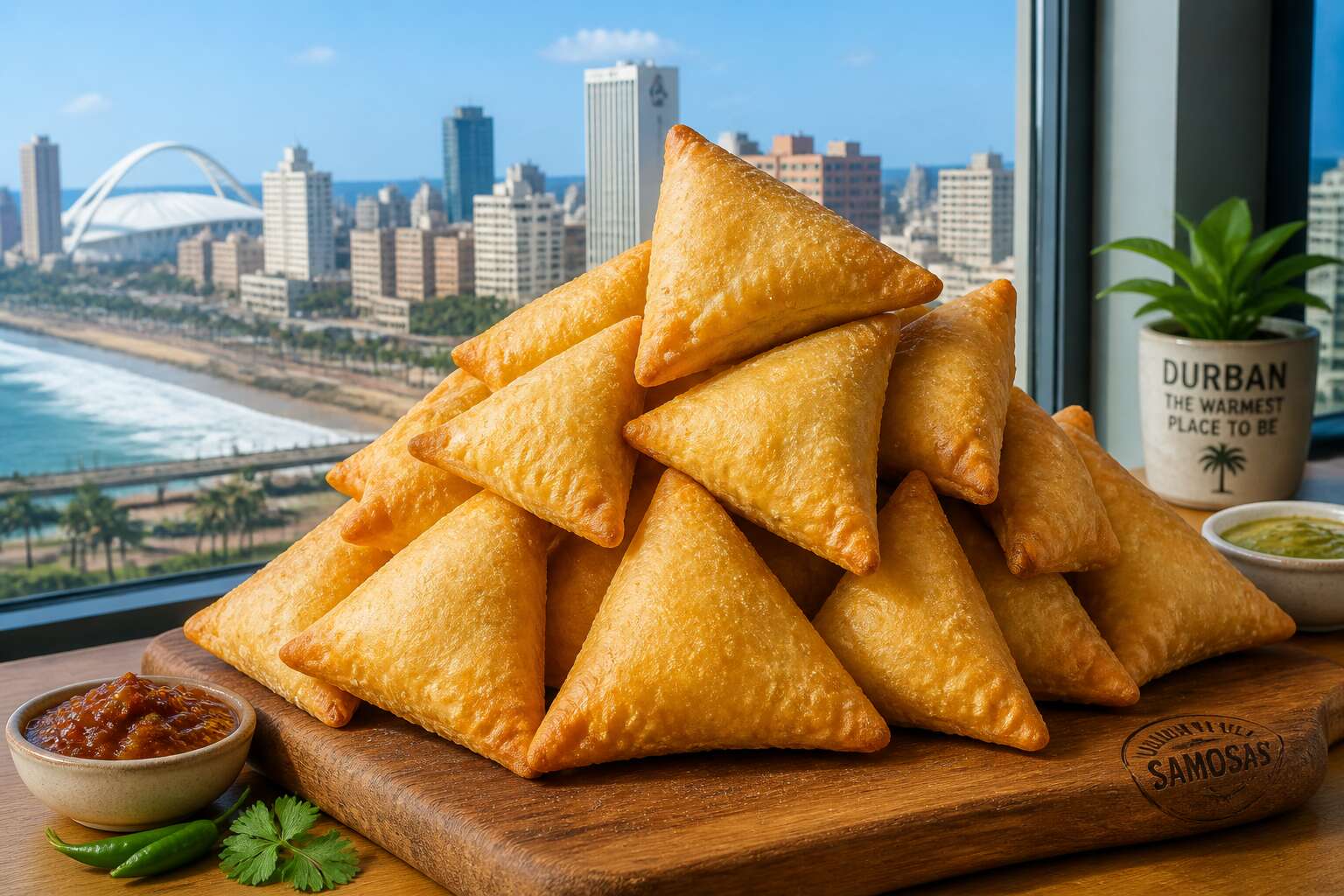
Understanding the Demand for Frozen Samosas in Durban
Why Durban Has a Unique Appetite for Savory Pastries
Durban’s appetite for samosas is no accident. The city’s Indian Ocean heritage, shaped by generations of traders and families, created a culinary culture where spice and crunch are daily requirements. Street corners, lunch spots and family tables all share the same rhythm: golden pastry, comforting filling, immediate satisfaction.
The demand for convenience altered the industry. Home cooks and catering businesses realise that preparing hundreds of samosas from scratch is impractical. That is why frozen samosas bulk durban orders have become central to many local food operations.
In my experience with local suppliers, the scale of this demand appears in specific patterns:
– Wedding seasons require thousands of units at short notice.
– Spaza shops and tuck shops need steady weekly replenishment.
– Event caterers demand uniform size and consistent quality.
Durban’s appetite is not a passing preference. It is a deeply rooted habit that now depends on reliable frozen samosas bulk durban supply.
Key Differences Between Retail and Bulk Purchasing
Buying a dozen samosas for a family dinner takes minutes. Supplying a wedding or a chain of tuck shops takes planning. That is the core difference between retail and bulk purchasing. Retail buyers walk into a store, grab a box and leave. Bulk buyers sit down with suppliers, agree on delivery dates and confirm freezing capacity. In Durban, the surge in frozen samosas bulk durban orders reflects this split demand.
Retail purchases are flexible and small. For events and commercial kitchens, consistency matters more than spontaneity. One batch must match the next. That is why bulk contracts rely on specific specifications.
- Retail: small pack sizes, short shelf life expectations.
- Bulk: pallet volumes, scheduled cold storage.
Understanding this demand helps suppliers manage stock levels and keep prices stable. For those ordering frozen samosas bulk durban, the priority shifts from flavour experimentation to reliability. Bulk is not a bigger retail bag. It is a separate system built around volume and repeat orders.
Identifying Your Target Market: Caterers, Restaurants, and Event Planners
Demand for frozen samosas in Durban comes from specific quarters. Caterers need volume without compromising quality. Restaurants require consistent supply for their menus. Event planners face unpredictable guest counts and need backup options.
These buyers share pain points: storage constraints, delivery reliability, and batch consistency. A wedding caterer might order hundreds of samosas weeks ahead. A restaurant owner needs weekly restocks. Event planners often place urgent orders during peak season.
The target market splits into three groups:
1. Caterers serving weddings, corporate functions, and cultural gatherings.
2. Restaurants adding samosas as a starter or snack item.
3. Event planners coordinating large-scale bookings.
Each group values frozen samosas bulk durban differently. Caterers look for portion control. Restaurants prioritise taste uniformity. Event planners focus on delivery timing. Suppliers who recognise these needs can match their frozen samosas bulk durban pricing and logistics to each segment’s real workload.
Sourcing and Selecting a Bulk Supplier
Evaluating Supplier Certifications and Food Safety Standards
A missing temperature log can end a caterer’s reputation faster than a stale samosa. When sourcing frozen samosas bulk durban, I demand certificates before tasting a single filling. HACCP plans, SABS certifications and municipal health inspection records show how a facility truly operates. A charming sales pitch cannot hide a lapsed audit.
Verify that certifications apply to the actual production line, not just the company letterhead. Review cold chain protocols and batch traceability records. A supplier who hesitates to share these details is likely concealing a fragmented cold chain. That hesitation speaks louder than any brochure.
Comparing Local Durban Producers vs National Distributors
Choosing between a Durban producer and a national distributor for frozen samosas bulk durban orders comes down to your operational rhythm. Local producers offer a shorter cold chain and the chance to walk the production floor before sunrise. You can taste test batches and adjust spice profiles in real time. National distributors, however, provide predictable volume and price stability across multiple locations.
When I compare suppliers, I weigh three factors:
– Delivery frequency and minimum order flexibility
– Response time when a batch runs into problems
– Consistency of spice heat across seasonal ingredient changes
A local producer might pivot to a custom filling within days. A national giant often requires long lead times. One supplier I visited in Springfield Park had a single freezer truck. Another in Johannesburg relied on third-party logistics. Both could deliver frozen samosas bulk durban; only one guaranteed the freshness I needed.
Requesting Samples and Conducting Taste Tests
When I source frozen samosas bulk durban, the sample request repays close attention. Most suppliers send a standard box. That box tells you little. Ask for a production run sample from the same batch line! I received three samples from one Springfield Park supplier, each from a different production day. The difference in oil absorption was startling.
When conducting taste tests, I check structural integrity after reheating before I consider flavour. A samosa that holds its crimp under a heat lamp and snaps cleanly tells you more than an ingredient list. I test each sample at multiple temperatures. One turned greasy at 15 minutes; another held firm.
My evaluation checklist includes:
- Crust crispness at zero, five, and fifteen minutes
- Filling moisture levels, especially potato-to-pea ratios
- Heat consistency across centre bites
Oil pooling in the sample bag signals a fryer temperature problem. That detail alone has saved me from contracts that would have produced soggy pastries by mid-shift.
Negotiating Pricing and Minimum Order Quantities
The lowest quote for frozen samosas bulk durban rarely survives contact with your actual operations. One supplier offered me a price 18% below the market, then doubled the MOQ and shortened the payment window. Selection and negotiation must happen in that order. I evaluate production capacity, storage turnover rates, and their willingness to freeze production slots for my account. Only after that do I talk numbers.
For pricing and minimum orders, I use a clear sequence:
1. Request tiered pricing at three order volumes
2. Confirm whether the rate locks for six months
3. Ask how MOQs flex with a standing monthly order
One Phoenix supplier dropped their minimum from 500 to 350 cases when I committed to a monthly schedule. The unit price rose slightly, but my warehouse costs fell. That trade matters more than the headline number. The right supplier for frozen samosas bulk durban shapes their terms around your kitchen’s rhythm, not their dispatch calendar.
Storage, Handling, and Logistics for Bulk Frozen Samosas
Recommended Freezer Capacity and Organization Strategies
At minus 18 degrees Celsius, a cubic metre of freezer space holds 2,000 samosas. For caterers in Durban, that means planning around the city’s humid heat and occasional load shedding. Your freezer capacity should match your busiest week, not your average one. Organise by production date, not by flavour, to avoid buried stock.
Use a rotation system:
- Label every carton with the delivery date.
- Place newer boxes behind older ones.
- Keep a stock count on a whiteboard near the freezer.
When handling frozen samosas bulk Durban suppliers deliver, move boxes quickly from the truck to the freezer. Never leave them on the dock. Logistics means scheduling deliveries for early morning, before the day’s heat peaks. This preserves the pastry’s crispness and prevents freezer burn.
Transporting Bulk Samosas Across Durban Safely
When a delivery truck leaves a Durban producer, the cargo hold must sit at minus 18 degrees Celsius. Any warmer and condensation forms, and condensation destroys pastry. For frozen samosas bulk durban shipments, the cold chain breaks at the loading bay, not on the road.
Route planning matters as much as temperature. N2 congestion near Spaghetti Junction can stretch a thirty minute drive into two hours. For frozen samosas bulk durban orders, drivers plot M4 corridor routes to keep delivery windows tight.
The receiving side carries equal responsibility. Check the internal temperature of a random carton before signing the delivery note! A reading above minus 15 degrees signals a compromised load. Most problems appear at the dock.
Clear the dock to freezer path. Pre-cool the receiving area. Assign two people to transfer each carton. Wet or crushed boxes signal thawing and refreezing, which ruins the pastry shell.
Stock Rotation and Shelf Life Management
Stock rotation is where bulk freezer operations shine or quietly unravel. For frozen samosas bulk durban buyers, the rule is first in, first out. Simple, yet many kitchens fail it by Friday. Label every carton with delivery date and batch code. Organise shelves so older stock sits within arm’s reach, while new arrivals move to the back. This is not fussiness. It is arithmetic.
Shelf life management depends on consistent temperature and honest record keeping. A freezer that cycles between minus 18 and minus 10 degrees ages pastry fast. One warm afternoon undoes months of planning. Track defrost cycles and keep a log.
Efficient operations keep a few habits:
- Date every carton on arrival with a permanent marker
- Record batch numbers in one spreadsheet
- Use coloured tape for delivery months
- Audit stock weekly and move older cartons forward
Handling matters equally, and for frozen samosas bulk durban orders, a dropped carton is a ruined batch. Refrozen samosas turn stale and greasy, and customers notice well before they complain.
Avoiding Defrosting and Re-Freezing Risks
Storage is a frozen samosas bulk durban operation’s foundation. The freezer should hold a steady minus 18 degrees Celsius. A thermometer that wobbles is a liability. Palletise cartons off the floor and away from walls so air circulates. This prevents warm spots that invite condensation and ice crystals.
Handling demands a gentle touch. A dropped carton may look intact, but pastry shatters internally. Re-freezing damaged samosas compromises their texture completely. Keep these habits:
- Carry one carton at a time through narrow doorways
- Inspect for crushed corners before shelving
- Never stack beyond labelled height
Logistics means moving stock from supplier to freezer without a thawing intermission. Use insulated vehicles for frozen samosas bulk durban deliveries. Plan routes so the cold chain stays unbroken, even in Durban traffic.
Menu Planning and Recipe Ideas with Frozen Samosas
Portioning Samosas for Events and Functions
Frozen samosas bulk durban orders simplify menu planning. A standard samosa weighs around 50 grams. For a cocktail hour, plan three pieces per guest. For a main course pairing, two suffice. This arithmetic prevents both waste and hunger.
Consider flavour rotation. Chicken and vegetable samosas served alongside chutney create variety. Add a mint yoghurt drizzle. For a hearty option, crumble samosas over a salad. The pastry holds texture when baked, not fried.
Portion for functions by counting heads, not guessing. Confirm guest numbers 48 hours ahead. Use this guide:
- Plated starter: 1.5 samosas per person
- Buffet line: 2 to 3 per person
- Standing reception: 4 per person
For frozen samosas bulk durban buyers, a platter with three dipping sauces works for most Durban events.
Pairing Sauces and Chutneys for Local Palates
A samosa without a worthy sauce is a missed opportunity. For frozen samosas bulk durban purchasers, the right chutney turns a simple snack into a local favourite.
Durban palates crave contrast. Pair a spiced potato filling with tamarind and date chutney for sour release. A mint and coriander yoghurt cools the heat. For a fiery kick, blend roasted garlic with peri peri oil.
Consider these recipe ideas:
- Split a samosa and serve over crushed corn with lime.
- Chop samosas into cubes and toss with spring onion and chutney vinegar.
These condiments elevate a bulk order without extra labour. Prepare sauces a day ahead. Use fresh coriander, local chillies, and raw cane sugar. Each batch holds its own when paired with a rotating roster of dips.
Creating Combo Platters with Other Frozen Snacks
A platter holds its reputation in the first three bites. For caterers moving frozen samosas bulk durban orders, the real opportunity sits in pairing them with other frozen snacks. Spring rolls, mini pies, and battered onion rings share the oven. Prep stays manageable.
Build a range of textures and temperatures. Crisp samosas beside soft bhajia, flaky pastry next to chewy calamari rings. This variety keeps guests circling the table.
Use a simple numbered system for your spread:
- Samosas with mint yoghurt
- Chicken skewers with tomato relish
- Mini vetkoek with curried mince
- Spiced chips with garlic aioli
A single frozen samosas bulk durban delivery then anchors multiple menu offerings. You cut labour, manage portions, and keep the snack table active without overthinking.
Serving and Reheating Techniques for Best Results
The crunch of a samosa lasts exactly as long as the reheating method allows. For anyone managing frozen samosas bulk durban inventory, mastering that moment separates a profitable menu from a wasted one.
Plan your menu around batch reheating. Use samosas as the main component in a grain bowl, or halve them lengthwise for a slider base. The pastry holds up when you respect its limits.
- Oven: 180°C for eight to ten minutes on a wire rack.
- Air fryer: 160°C for five minutes, shaking halfway.
Never microwave. That destroys the layers. Reheat in small waves so each plate comes out crisp. Let them rest for two minutes before serving, which allows the filling to settle without steaming the shell.
Cost Considerations and Profitability for Businesses
Calculating Per-Unit Costs and Margins
The price of frozen samosas bulk durban rarely tells the full story. In Durban’s commercial kitchens, the real cost emerges only after you weigh breakage, freezer burn, and rejected portions. Per-unit mathematics become a mirror of your operation’s discipline. A caterer who orders 500 pieces at R8.50 each must still account for the 12 samosas that crack during transport and the 20 that stick to the tray. That pushes the effective cost toward R9.20. Your margin calculation must include electricity for the freezer, packaging for delivery, and the sauces you hand out. If you sell a plate at R25 with two samosas, your food cost sits at 36.8%. That is healthy. But the margin only holds if you sell out before the stock rotates beyond its prime. Holding stock longer erodes profit silently. For steady cash flow, track these metrics monthly:
– Actual unit cost after spoilage
– Gross profit per samosa sold
– Spoilage rate percentage
The businesses that thrive in Durban are not the ones with the lowest invoice. They are the ones who know exactly what each unit truly costs.
Factoring in Delivery and Storage Overheads
Delivery costs in Durban shift with fuel prices and port traffic. A refrigerated van idling in congestion still burns diesel, and every kilometer from supplier to cold room adds a tangible number to the cost of frozen samosas bulk durban. Storage overheads follow a similar logic. A commercial freezer draws power constantly, and Durban’s summer heat makes the compressor work harder. The insulation of your storage room, the age of the unit, even door openings, all shape the electricity bill. Some operators calculate these as a fixed percentage of order value. Others track per pallet.
Consider these factors when planning margins:
- Refrigerated transport per delivery run
- Electricity consumption per freezer unit
- Packaging for cold chain integrity
- Insurance for stock on premises
These costs never appear on the supplier’s invoice, yet they own a slice of every samosa sold. Buyers who compare frozen samosas bulk durban prices across suppliers rarely see the real gap in delivered cost.
Comparing Bulk Pricing vs Regular Wholesale
Two buyers can purchase the same frozen samosas bulk durban shipment and walk away with wildly different profit outcomes. Regular wholesale pricing rewards steadiness, while true bulk pricing rewards volume and forecasting courage. The gap between these tiers hides in payment terms, delivery windows, and whether the supplier carries stock on your behalf.
Compare what actually shifts when you commit to bulk:
– Payment terms that lengthen with order size
– Reorder flexibility versus locked schedules
– Who absorbs fuel price fluctuations
Profitability hinges on your ability to move volume before the freezer cycle costs erode the discount. A caterer selling samosas at R8 each needs a different margin structure than a spaza shop pricing them at R5. Bulk pricing in Durban only pays when demand forecasts align with storage capacity. The cheapest frozen samosas bulk durban quote becomes the most expensive if you lock cash into stock that sits.
Managing Budget Fluctuations and Seasonal Demand
Seasonal demand in Durban moves in waves as predictable as the Indian Ocean tides. I have watched caterers overcommit to frozen samosas bulk durban in July, only to stare at freezer inventory when the event season stalls. Budget fluctuations are not a sign of poor planning; they are the trade’s natural rhythm.
Consider the factors that shift purchasing:
- Festival dates that spike demand for savoury snacks
- School holiday schedules that alter catering orders
- Weather patterns that change outdoor event attendance
Profitability hinges on matching order volumes to those cycles. When demand dips, a smaller regular wholesale order protects margins better than a bulk discount that lingers unsold.
Marketing Your Samosa Offering to Durban Customers
Leveraging Local Keywords in Online Listings
A catering business depends on who finds it first. When a caterer in Umhlanga types frozen samosas bulk durban into Google, they expect a supplier that knows their geography. Your online listing should reflect that. Mention delivery routes along the M4 and N3. Name suburbs like Phoenix, Chatsworth, and Verulam in your service areas.
In my experience, a well-filled profile outperforms paid advertising. Your business categories should include snack supplier and frozen food distributor. Add photos of stacked boxes, not just samosas on a plate. Keep opening hours accurate. Set your Google Business Profile coverage to eThekwini and surrounding regions.
Precision makes the difference:
– Use specific suburb names
– Show real packaging
– List bulk order quantities
Caterers want certainty from a supplier. Give it to them in the listing itself.
Building Partnerships with Durban Caterers and Restaurants
Your first order to a Phoenix catering kitchen can be the beginning of a decade long relationship. I have seen suppliers lose accounts because they treated samosa delivery like a transaction. Durban caterers remember who shows up with cold chain logs and who vanishes when the load shedding hits. The real marketing happens on their loading dock, not in a brochure.
To build partnerships with Durban caterers and restaurants, you must offer predictability around your frozen samosas bulk durban orders. They want a contactable human, a fixed weekly schedule, and a willingness to adjust spice levels for their clientele. The ones who survive are those who become an extension of the kitchen itself.
- Drop off samples during their quiet hours
- Ask about their function dates and peak seasons
- Share your delivery schedule in writing
Restaurants talk to each other across Berea and Umhlanga. One satisfied chef is your best ad. That is worth more than any sponsored post!
Offering Taster Boxes to Potential Bulk Clients
One taster box, delivered at the right moment, can unravel years of procurement loyalty. I have watched a caterer in Springfield reject a national supplier after one bite of a properly spiced chicken samosa, then phone me for frozen samosas bulk durban quantities before the box was empty.
Taster boxes are not about generosity. They are about demonstrating precision. Include the exact products you intend to supply, with labels that list batch numbers and reheating instructions.
- Three varieties of samosas, including a local favourite like mince and chilli
- A portion of your signature chutney
- An invoice template with bulk pricing already filled in
That last item separates you from every other vendor who drops off samples and waits. A caterer should not have to ask for your price list. When they open the box, they should already see the path to a bulk order. The decision to switch suppliers often happens in that first hour, so make the box count.
Using Social Media to Showcase Your Samosa Supply
Durban’s social feeds overflow with curry photos, yet caterers still hunt for suppliers they can trust. Your frozen samosas bulk durban deserves more than a static menu shot. Post a clip of the samosas sizzling in a catering kitchen, or a quick pan across a pallet wrapped for delivery. That visual proof moves procurement managers faster than any advertisement.
Use social media to show the operation behind the order.
- Freezer rooms at the right temperature
- Batch labels with production dates
- Loading a delivery van for a Durban venue
These posts answer the questions buyers ask privately, so when they message you, they already know you can handle bulk supply without repeated follow ups.



0 Comments